
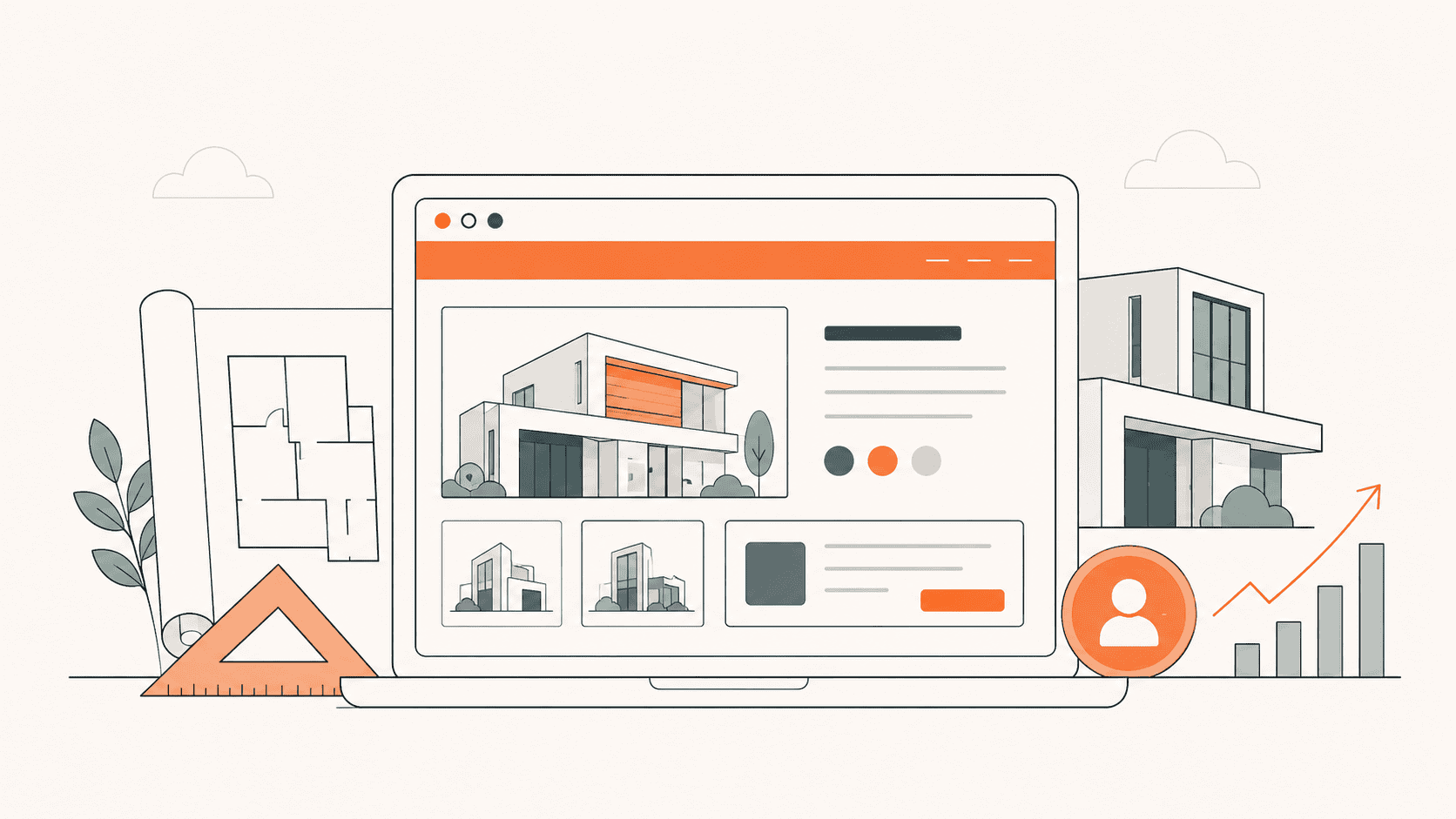
A builder or architect’s best marketing tool has always been a finished project. Walk someone through a home you’ve built or a building you’ve designed, and the work sells itself.
A website does the same job — except it works at 2am when you’re asleep, reaches people you’ve never met, and shows your portfolio to someone in the middle of making the biggest financial decision of their life.
Most builder and architect websites don’t take advantage of this. They’re either non-existent, outdated, or built without any understanding of how a potential client actually makes a decision about who to hire for construction or design work.
This guide covers what a construction company or architecture firm website actually needs to do, what goes wrong most often, and what the best builder and architect websites have in common.
Who Is Looking at Your Website and What Are They Deciding
A potential client looking for a builder or architect is usually at one of two stages.
The first stage is early research — they have a plot of land, a plan to build, or an existing structure they want to modify, and they’re looking for options. They’re comparing, shortlisting, assessing. At this stage they’re not ready to call. They’re trying to form an impression.
The second stage is validation — they’ve heard your name through a reference, seen one of your projects, or found you through search, and they want to verify you’re legit before reaching out. They’re not browsing. They’re checking.
In both cases, your website needs to do the same things: show your work convincingly, establish that you can handle their scope, and make it obvious how to get in touch.
What it doesn’t need to do: explain the history of architecture, describe construction processes in technical detail, or list every service with equal prominence regardless of what you actually want to sell.
What Most Builder and Architect Websites Get Wrong
No portfolio, or a portfolio that doesn’t do the work justice. This is the most common and most costly mistake. A construction company website without a visible, high-quality portfolio of completed projects is like a restaurant with no photos of its food. The work is the product. If you can’t show it, you can’t sell it.
Poor portfolio execution is almost as bad as no portfolio: blurry phone photos, projects listed without any description, or a gallery page that takes forever to load on a mobile connection. Each of these signals poor attention to detail — exactly the opposite of what you want a client to conclude about your construction work.
No specificity about what they build. “We undertake all types of construction projects” is meaningless. A client with a ₹80 lakh villa project wants to know you’ve built villas at that scale before. A client planning a commercial complex wants to see commercial work in your portfolio. The more specific you are about what you do and what you’ve done, the easier it is for the right client to self-select.
No way to make quick contact. Construction and architecture decisions are long sales cycles. But the moment someone decides to reach out is often impulsive — they’ve just seen a project you built, or a friend mentioned your name. If they can’t find a WhatsApp number or a phone number instantly on your site, that impulse passes and you’ve lost the enquiry.
Outdated projects only. A portfolio of work from 2016–2019 with nothing recent suggests one of two things: the business isn’t active, or it is but doesn’t keep its website current. Neither is reassuring. A rolling portfolio with recent completions shows a business that’s actively working and growing.
No location context. A builder in Thrissur isn’t competing with builders in Mumbai. Local references — project locations, areas you serve, familiarity with local materials, approvals, and regulations — are both a trust signal and an SEO advantage. A potential client searching for “villa builders in Palakkad” wants to know you know that market.
What a Builder or Architect Website Actually Needs
A portfolio that’s built to convert, not just impress. Every project in your portfolio should have: a clear photo (or set of photos), the project type, the location, a brief description of the scope, and ideally a client testimonial or note about the project. This structure turns a gallery into evidence.
Separate sections for different project types. If you do residential builds, commercial construction, renovations, and interior work, each deserves its own section. This isn’t about SEO — it’s about letting the right client find their version of your work without digging.
A clear “what we build” or “our work” section above the fold. Before a visitor navigates to your portfolio, they should see immediately what kind of work you do. A clean, visual summary — “villas, apartments, commercial buildings, and renovations across Thrissur and Palakkad” — tells them in five seconds whether to keep reading.
Social proof tied to specific projects. A testimonial that says “excellent work, very professional” is forgettable. A testimonial that says “they completed our 2,400 sq ft villa in Chalakudy in 14 months, exactly to specification, and the finish quality has been consistently praised by everyone who’s seen it” is specific enough to be convincing.
A simple, friction-free consultation request. The goal of a builder website isn’t to close the sale online — it’s to generate a conversation. A “discuss your project” CTA that opens a WhatsApp conversation or a simple form asking for project type, location, and approximate budget is all you need. Keep it minimal. If they have to fill in a ten-field form before you’ll talk to them, most won’t.
Architecture Firm Website Design: A Slightly Different Brief
For architects and design-led firms, the website needs to do everything above — and carry an additional creative dimension.
Architecture clients are buying a vision as much as a capability. The website needs to communicate design sensibility, not just construction competence. This means:
Curated, high-quality photography over quantity. Five beautifully photographed projects are more persuasive than twenty mediocre ones. Invest in proper architectural photography for your best work, even if it means a smaller portfolio initially.
A design philosophy that’s legible to a non-architect. What do you believe good design means? How does that show up in your work? A brief, plain-language “approach” section — not dense with architectural theory, but human and specific — helps clients understand who they’d be working with.
Process clarity. Many clients hesitate to approach an architect because the process feels opaque and expensive. A simple “how we work” section — site visit, brief, concept design, approvals, construction drawings, site supervision — removes that uncertainty and makes the first call feel less intimidating.
What Website Design for Builders Costs Versus What It Returns
A single residential project typically represents ₹20–₹80 lakhs or more in construction value, with builder margins of 15–25%. One project from a website enquiry covers the cost of a managed website for years.
Most builders and architects in Kerala get their work through referrals — and that’s fine until referrals slow down. A website doesn’t replace referrals; it adds a parallel channel that works even when your existing network is quiet.
At instabiz, we offer two plans for builders and architects:
Get Online — ₹999/month (billed annually) or ₹2,999/month rolling
A professional, mobile-friendly website live in 4 working days. Includes a project portfolio section, click-to-call and WhatsApp buttons, Google Business Profile setup, fast and secure hosting, and monthly maintenance. No setup fee.
Get Customers — ₹6,999/month
Everything in Get Online, plus local search optimisation so you appear when people in your area search for builders or architects, smart project enquiry forms, instant alerts when someone reaches out, active local ad management, and a monthly results summary. Eligibility is limited to maintain quality across clients.
Frequently Asked Questions
I get most of my work through referrals. Do I still need a website? Yes — for one specific reason. Referrals check your website before they call. Someone who’s been told about your work by a friend will look you up before reaching out. What they find either confirms the recommendation or undermines it.
My work is high-end. Won’t a simple website undersell it? A clean, simple website with great photography of your actual work will always outperform an elaborate website with average photography. The work sells the work. The website’s job is to present it clearly and make it easy to get in touch.
How do I get good photos of completed projects without a big photography budget? Start with your best two or three projects. A professional architectural photographer for a full day will cost ₹10,000–₹25,000 and the photos will serve you for years. It’s a one-time investment, not an ongoing cost.
Can the website show an active project? Yes — a “currently building” or “projects in progress” section adds a sense of activity and currency to the portfolio. It also gives returning visitors something new to look at.
How long does it take to get a builder or architect website live with instabiz? 4 working days from when we have your basic content — project photos, contact details, and a brief description of your services.
If you’re a builder or architect who wants a website that actually generates enquiries rather than just existing online, a quick conversation on WhatsApp is the fastest way to find out whether instabiz is the right fit.
instabiz builds and manages websites for builders, architects, and construction companies across Kerala and India. Plans start at ₹999/month with no setup fee.